Introduction
In 2025, trade relations between the United States and Spain have been significantly reshaped by a new wave of U.S. tariff policies affecting the European Union as a whole. Washington’s renewed protectionist approach has increased uncertainty for exporters, investors, and policymakers on both sides of the Atlantic. Spain, as one of the EU’s major exporters of agricultural and industrial goods, has been particularly exposed to the consequences of these measures.
1. The New U.S. Tariff Regime
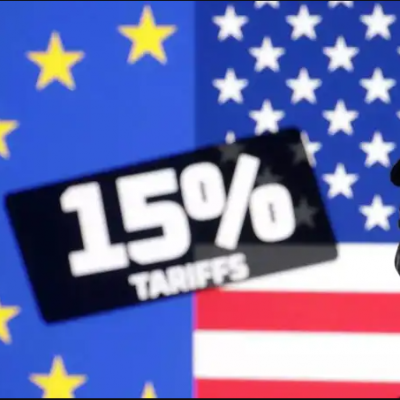
As of August 2025, the United States introduced a general minimum tariff of 15% on imports from the European Union under a revised U.S.–EU trade framework. This policy replaced a more fragmented tariff system and eliminated certain exemptions, including the so-called de minimis rule, which previously allowed small shipments to enter the U.S. market duty-free.
For Spanish exporters, this change has direct implications for key products such as:
- Olive oil and table olives
- Wine and other agri-food products
- Footwear and selected manufactured goods
The new tariffs increase final prices in the U.S. market, reducing the competitiveness of Spanish goods compared to domestic and non-EU alternatives.
2. Impact on Spain’s Trade Balance

A Growing Trade Deficit
Official data for 2025 show a sharp deterioration in Spain’s trade balance with the United States. By October, Spain’s bilateral trade deficit had reached over €12 billion, representing an increase of more than 45% year-on-year.
This widening gap is largely explained by:
- Rising Spanish imports of U.S. pharmaceuticals and energy products
- A slowdown in Spanish exports due to higher tariff barriers
Most Affected Sectors
Some sectors have been hit harder than others:
- Black olives: Spanish exporters have lost significant U.S. market share since earlier tariff rounds, with long-term revenue losses running into hundreds of millions of euros.
- Olive oil: Producers warn that higher tariffs are undermining Spain’s position as a leading global supplier, while also increasing costs for U.S. consumers.
- Industrial components: Automotive parts and steel-related exports face reduced margins and supply-chain disruptions.
3. Spain’s Policy Response
Trade Response and Support Plan
In May 2025, the Spanish government approved a €14.1 billion Trade Response and Relaunch Plan aimed at cushioning the impact of U.S. tariffs. The plan includes:
- Export credit guarantees
- Risk-insurance mechanisms
- Liquidity support for affected firms
- Special assistance for SMEs dependent on the U.S. market
The objective is to preserve employment, maintain export capacity, and help companies diversify into alternative markets.
Diplomatic and Trade Negotiations
Spain has intensified diplomatic efforts within both the EU framework and bilateral channels to secure exemptions or reductions for strategic products, particularly olive oil. Spanish officials argue that such tariffs distort markets and harm consumers on both sides of the Atlantic.
4. The European and Global Context

EU Countermeasures
The European Union has responded with counter-tariffs worth up to €26 billion, targeting selected U.S. exports, particularly in response to American duties on steel and aluminum. While these measures aim to rebalance trade, Brussels has emphasized that escalation remains a last resort.
A Fragile Transatlantic Compromise
The current U.S.–EU agreement maintains the 15% general tariff ceiling, offering predictability but falling short of full liberalization. For Spain, this compromise limits further damage but does not fully restore pre-tariff trade conditions.
5. Business Community Reactions
Spain’s main business association, the CEOE, has expressed strong concern over the tariff framework, warning that it:
- Increases costs for exporters
- Creates legal and regulatory uncertainty
- Weakens European competitiveness in global markets
Business leaders argue that prolonged tariff pressure could accelerate offshoring, reduce investment, and fragment global supply chains.
6. Economic Effects and Future Outlook
Short- and Medium-Term Effects
In the short term, tariffs are expected to:
- Reduce export volumes
- Compress profit margins
- Shift trade flows toward alternative markets
In the medium term, companies may respond by relocating parts of production, renegotiating contracts, or investing more heavily in non-U.S. destinations.
What Comes Next?
Despite current tensions, both sides signal a willingness to continue dialogue. Spain and the EU see negotiation as the only sustainable path forward, while also accelerating efforts to diversify trade toward Latin America, Asia, and the Middle East.
The future of U.S.–Spain trade will depend on:
- The evolution of U.S. trade policy
- EU unity in negotiations
- Spain’s success in strengthening competitiveness and market diversification
Conclusion
The U.S.–Spain tariff dispute in 2025 illustrates how trade policy has become a central geopolitical tool with far-reaching economic consequences. While Spain remains a committed transatlantic partner, higher U.S. tariffs have disrupted key export sectors, widened the trade deficit, and forced both government and businesses to adapt rapidly.
Whether these measures become a permanent feature or a transitional phase will largely depend on political decisions in Washington and Brussels — and on Spain’s ability to navigate an increasingly fragmented global trading system.